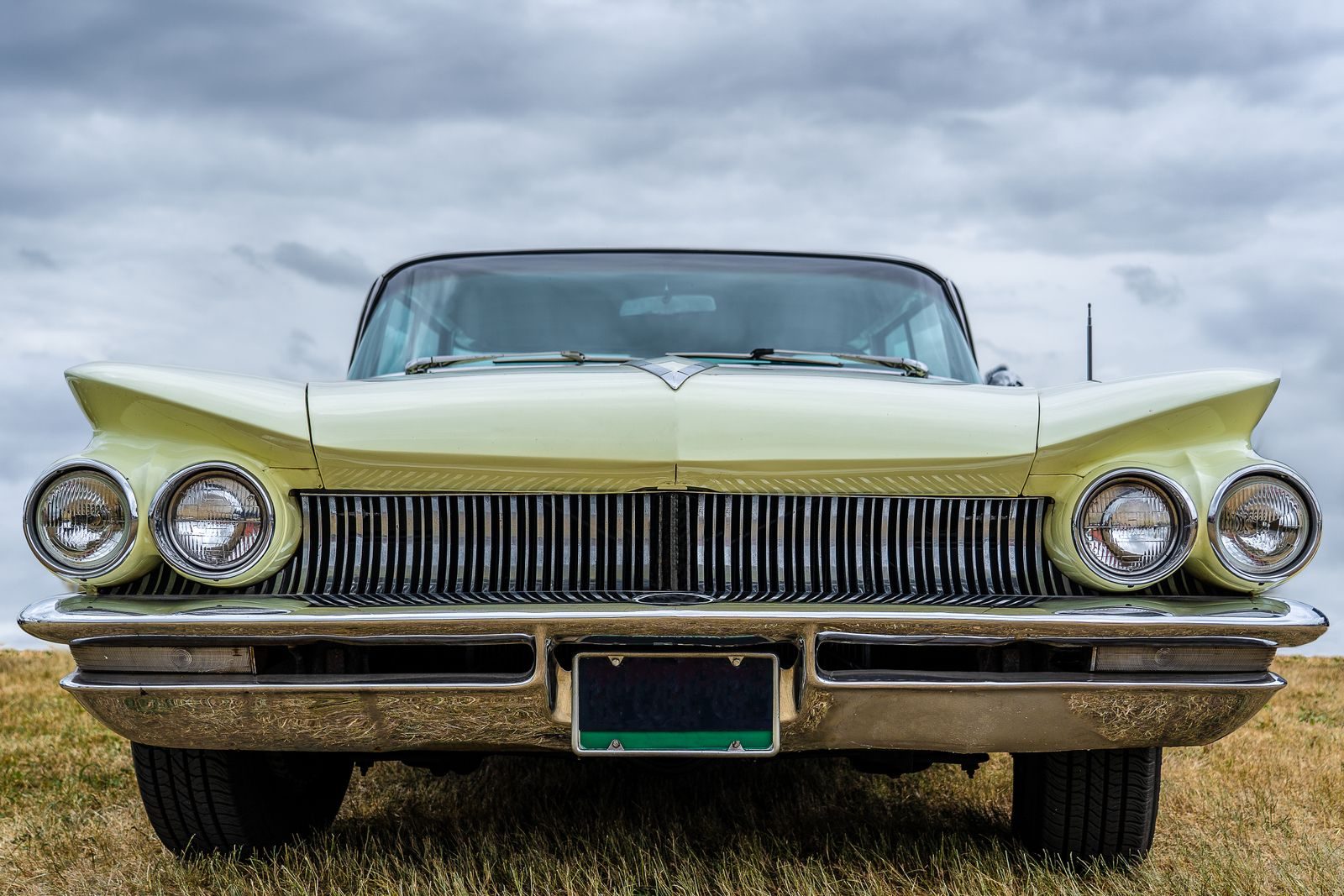
An Ontario historic vehicle plate is more than a finishing touch for a well-kept classic. It is a special registration status, and it comes with rules about the vehicle itself and how you may use it on the road.
The main point is simple. A historic plate is not an insurance policy. It does not set your claim value, it does not add physical damage protection, and it does not replace the need for valid auto insurance. Your plate and your policy need to tell the same honest story about the car, its condition and how you use it.
This guide explains the difference in plain language, so you can enjoy your collector car without making assumptions that cause trouble later.
Historic vehicle plate vs. auto insurance policy
| A historic vehicle plate | An auto insurance policy |
|---|---|
| Is a provincial vehicle registration status. | Is a contract that provides the insurance you bought. |
| Is based on Ontario’s legal definition of a historic vehicle and its permitted use. | Lists the insured vehicle, drivers, coverage choices, deductible and policy period. |
| Does not decide how much an insurer will pay after a loss. | Sets the coverage, limits, exclusions and claim settlement terms. |
| Does not replace proof of insurance. | Provides the proof of insurance you must carry while driving. |
Think of the plate as a registration class and the policy as your financial protection. Both matter, but they do different jobs.
Ontario’s legal definition of a historic vehicle
A historic vehicle must meet every part of the test
Under Ontario Regulation 628, a historic vehicle is a motor vehicle that meets all of these conditions:
- It is at least 30 years old.
- It is driven on a highway in parades, for exhibition, on tours or at similar functions organized by a properly constituted automobile club, or for repair, testing or demonstration for sale.
- It is substantially unchanged or unmodified from the original manufacturer’s product.
- It does not have year-of-manufacture plates attached to it.
Age is only one part of the test. A 30-year-old vehicle does not qualify just because it is old. Its use, its condition and its plates all matter too.
Historic plates and year-of-manufacture plates are not the same
Ontario also has a separate year-of-manufacture plate option for some qualifying vehicles. That is a different thing. The regulation states clearly that a historic vehicle does not have year-of-manufacture plates attached to it.
If you are choosing between the two, do not decide on looks alone. Confirm which option fits the car’s condition and your intended use before you apply.
Modifications can change the answer
A classic with period-correct repairs is not the same as a heavily modified car. Engine swaps, major suspension changes, custom chassis work and other big alterations may affect whether the vehicle still meets the historic vehicle test. They can also matter to an insurer when it looks at the car’s value and risk.
Keep clear records of restoration work, receipts, photographs and any major modification. Good records make your conversations with both ServiceOntario and your insurer much easier.
How historic plate status affects the way you drive
It is not a daily-driver registration class
The legal definition links historic vehicle use to parades, exhibitions, club tours, repair, testing and demonstration for sale. It is not a general commuting class.
A drive to a scheduled club tour, a car show or a repair shop fits those listed purposes far more easily than a school run or a weekly grocery trip. If a planned trip does not clearly fit, check the rule before you drive.
Your insurance needs to match the real use
Insurance questions are usually practical. How often do you drive the car? Where is it kept? Who drives it? Is it used for commuting, business, shows, club events or only the odd pleasure drive?
Do not describe the car as a weekend collector vehicle if you actually use it for regular transport. The Financial Services Regulatory Authority of Ontario (FSRA) says policyholders must give true and accurate information and must report changes that could affect their insurance.
That rule protects you as much as it protects the insurer. Correct details help make sure you are quoted for the right kind of policy, with no surprises during a claim.
What a historic plate means for your coverage
You still need valid Ontario auto insurance
Ontario requires vehicle owners to carry auto insurance, and you must have proof of insurance while driving. FSRA explains that the Certificate of Automobile Insurance identifies the insured vehicles, the listed drivers, the coverages selected and the policy period. A vehicle is insured only when it is properly shown on that certificate. See FSRA’s guide to Ontario’s auto insurance requirement.
A historic plate does not create insurance by itself. You still need an active policy for that specific car.
The policy, not the plate, decides what is covered
Your plate does not automatically include:
- agreed value settlement;
- Collision or Upset coverage;
- Comprehensive coverage for theft, vandalism or weather damage;
- coverage for spare parts, tools or automobilia;
- roadside assistance or flatbed towing; or
- coverage while the car is being restored, transported or stored.
Some of these protections may be available through a collector car insurance policy or other optional coverage, but the wording and availability differ by insurer. Ask what is included rather than relying on the word “historic.”
Ontario’s standard auto policy includes certain core coverages. Physical damage protections such as Specified Perils, Comprehensive, Collision or Upset, and All Perils are optional choices that deserve a careful read. FSRA’s guide to optional coverage explains the options and notes that deductibles and exclusions may apply.
A historic plate does not guarantee agreed value
Many collector car owners want to protect the car’s real market or restoration value. That is a valuation question, not a plate question.
Ask your broker or insurer whether the policy uses actual cash value, agreed value or another settlement method. Then ask how the amount is supported, when it must be reviewed, and what happens after a partial loss or a total loss. In Ontario, the agreed value endorsement is OPCF 19A, and it must actually be issued for your vehicle. For a plain-English comparison, see our guide to agreed value vs. actual cash value.
Accurate disclosure is essential
Tell the insurer about the historic plate, the car’s current condition, any modifications, the annual kilometres, the storage location, the regular drivers and the intended use. Report changes too, such as finishing a restoration, adding performance parts or starting to drive the car more often.
FSRA warns that incomplete or incorrect information can lead to a policy being cancelled or even treated as void, which can leave the owner without protection for a claim. Read FSRA’s advice on working with an insurer or broker before you make changes.
Coverage questions collector car owners should ask
How will the car be valued after a loss?
Do not assume a classic will be valued like a modern used car. Ask how the insurer will set the value and which documents it wants: an appraisal, a purchase record, comparable sales, restoration invoices or photographs. Our tips for getting an accurate appraisal on your classic car cover what a good appraisal should include.
If the value changes after major work, tell the insurer. An old appraisal may not reflect a finished restoration, a rare option or an expensive upgrade.
Which physical damage coverages are included?
Third-party liability coverage is essential, but it does not protect your own car. Ask whether the quote includes Comprehensive, Collision or Upset, Specified Perils or All Perils, and confirm the deductible for each one.
Comprehensive can respond to certain losses other than collision, including theft, vandalism and falling objects, subject to the policy terms. Collision or Upset can respond when the car hits another object or tips over. Read the wording before you assume a particular loss is covered.
What happens during storage, transport or restoration?
Collector vehicles often spend long stretches in a garage, workshop or storage unit. They also travel on trailers to shows, appraisals and repair shops. Each situation raises its own questions:
- Is the car covered while it is stored?
- Is theft, fire or water damage included?
- Are detached parts, tools and memorabilia covered, and up to what limit?
- Is the car covered while it is being transported?
- Does coverage change while it is partly dismantled or under restoration?
There is no single answer for every policy. Get your answer in writing before you rely on it.
Do the policy’s use limits fit your plans?
Some collector car policies are built for limited pleasure use, events and occasional drives. If you want to commute, take frequent long trips, use the car for business or let a new driver use it regularly, say so before you buy or renew.
For a car used as ordinary transport, review our auto insurance options as well. The right choice depends on how the car is actually used, not on its age or looks.
The permit fee and the insurance premium are separate
Ontario Regulation 628 currently lists a $0 annual permit validation fee for a historic vehicle permit in Schedule 4. That does not mean the car is insured for free, and it does not mean every registration transaction is free. Insurance premiums, deductibles and optional coverage are a separate matter.
Before you apply, confirm the current process and any fees directly with ServiceOntario. Before you drive, confirm that the car appears correctly on your insurance certificate and that you have current proof of insurance.
A simple checklist before you apply, renew or drive
Confirm the vehicle qualifies
- Check that the car is at least 30 years old.
- Review whether it is still substantially unchanged or unmodified from the original manufacturer’s product.
- Confirm that you are not using year-of-manufacture plates on it.
- Make sure your intended road use fits the historic vehicle definition.
Make the insurance details match
- Tell the insurer that the car has, or will have, historic vehicle registration.
- Describe the real use: club tours, exhibitions, repair trips, testing, pleasure drives or anything else you expect.
- Disclose modifications, restoration status and any updated value.
- Confirm the drivers, the estimated annual kilometres and the storage location.
- Read the Certificate of Automobile Insurance and the policy wording, not just the quote summary.
Keep useful documents together
Keep your policy, proof of insurance, registration papers, photographs, invoices and appraisal in one place you can reach quickly. Update the file after a major restoration stage, a new appraisal or a change in use. It saves time at renewal, and it helps you explain the car accurately if you ever need to claim.
Conclusion
A historic vehicle plate can be a good fit for the right Ontario collector car, but it does not replace careful insurance planning. The plate affects your registration status and your permitted use. Your policy controls the protection you have, the value method, the deductible and the claim terms.
Before your next show, cruise or repair trip, make sure the registration, the intended use and the insurance details all match. If you want help reviewing collector car coverage, contact Lant Insurance to discuss the vehicle and your plans. This article is general information; always rely on the current regulation and your own policy wording for your situation.
Frequently asked questions
1. What is a historic vehicle plate in Ontario?
It is a provincial registration status for a motor vehicle that meets Ontario’s historic vehicle definition. The definition looks at the car’s age, its condition, its permitted road use and whether it has year-of-manufacture plates attached. It is not an insurance product and does not create coverage on its own. Review the current wording in Ontario Regulation 628.
2. Is a vehicle automatically eligible once it is 30 years old?
No. The car must be at least 30 years old, but it must also be substantially unchanged or unmodified from the original manufacturer’s product, be used for the permitted purposes, and not have year-of-manufacture plates attached. Age alone is not enough.
3. Can I use a historic vehicle plate for daily commuting?
Do not assume so. Ontario’s definition ties highway use to parades, exhibitions, tours or similar automobile club functions, and to repair, testing or demonstration for sale. Regular commuting is not on that list. Check the rule before any trip that does not clearly fit those purposes.
4. Do I still need auto insurance with historic plates?
Yes. Ontario requires vehicle owners to carry auto insurance, and drivers must have proof of insurance with them. A historic plate is registration, not proof of insurance. Your car must be properly listed on an active policy. See FSRA’s guide to the insurance requirement.
5. Will a historic plate automatically lower my premium?
No. A plate does not create a discount by itself. Pricing depends on factors such as the vehicle, the driving record, the kilometres driven, the coverage selected, the deductible and the insurer. A collector car policy may be priced differently from a regular auto policy, but compare the coverage and the use conditions, not only the premium.
6. Does a historic plate give my car agreed value coverage?
No. Agreed value is an insurance arrangement, not a registration benefit. In Ontario it comes from the OPCF 19A endorsement, and it applies only to the vehicle listed on that form. Ask your insurer how the policy settles a total loss, what documents support the value and when the value must be reviewed.
7. Can a modified classic qualify for historic plates?
It depends on the changes. The definition requires the vehicle to be substantially unchanged or unmodified from the original manufacturer’s product, so significant modifications may affect eligibility. They should also be disclosed to the insurer, because they can change the car’s value, repair cost and risk profile.
8. Are historic plates and year-of-manufacture plates the same?
No. They are separate registration options. Ontario Regulation 628 states that a historic vehicle does not have year-of-manufacture plates attached. If you are considering either one, confirm the current requirements before you choose.
9. What should I tell my insurer about my historic vehicle?
Tell the insurer the registration status, the intended use, the estimated annual kilometres, the storage location, the regular drivers, the restoration status and all significant modifications. Provide updated appraisal or restoration records when they affect value. Your policy and premium are based on the facts you give.
10. Is the annual historic vehicle permit validation fee currently $0?
Ontario Regulation 628 currently lists a $0 annual permit validation fee for a historic vehicle permit in Schedule 4. This is a registration fee item, not an insurance benefit. Registration rules and fees can change, so confirm the current ServiceOntario process before you apply or renew.
Leave a Reply